
Most AI projects fail before anyone writes code.
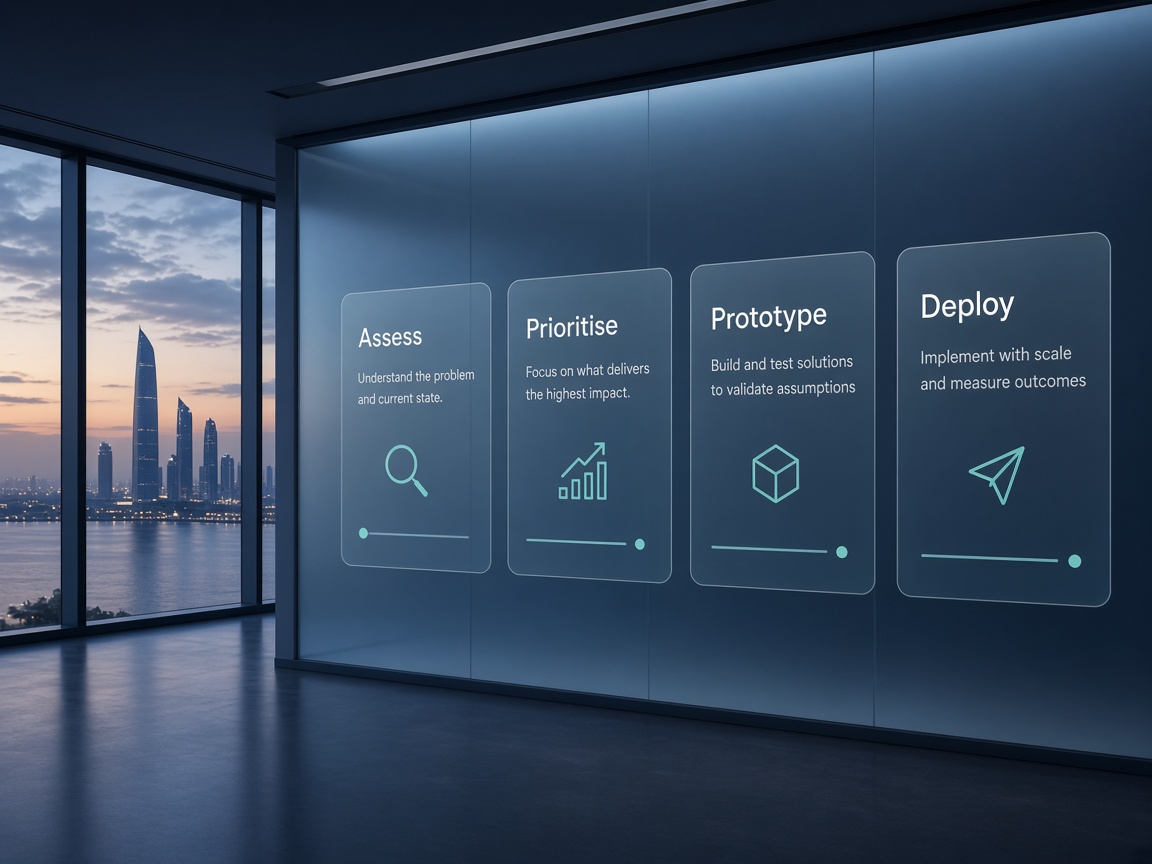
Four steps from relevance to use.
Assess, prioritise, prototype, then deploy — with ownership and evaluation built in from the start.
- 01
Assess
Where AI is genuinely relevant in your business, what data and process foundations exist, and what it is worth.
- 02
Prioritise
A shortlist of use cases ranked by value, feasibility and risk, with a roadmap and governance to match.
- 03
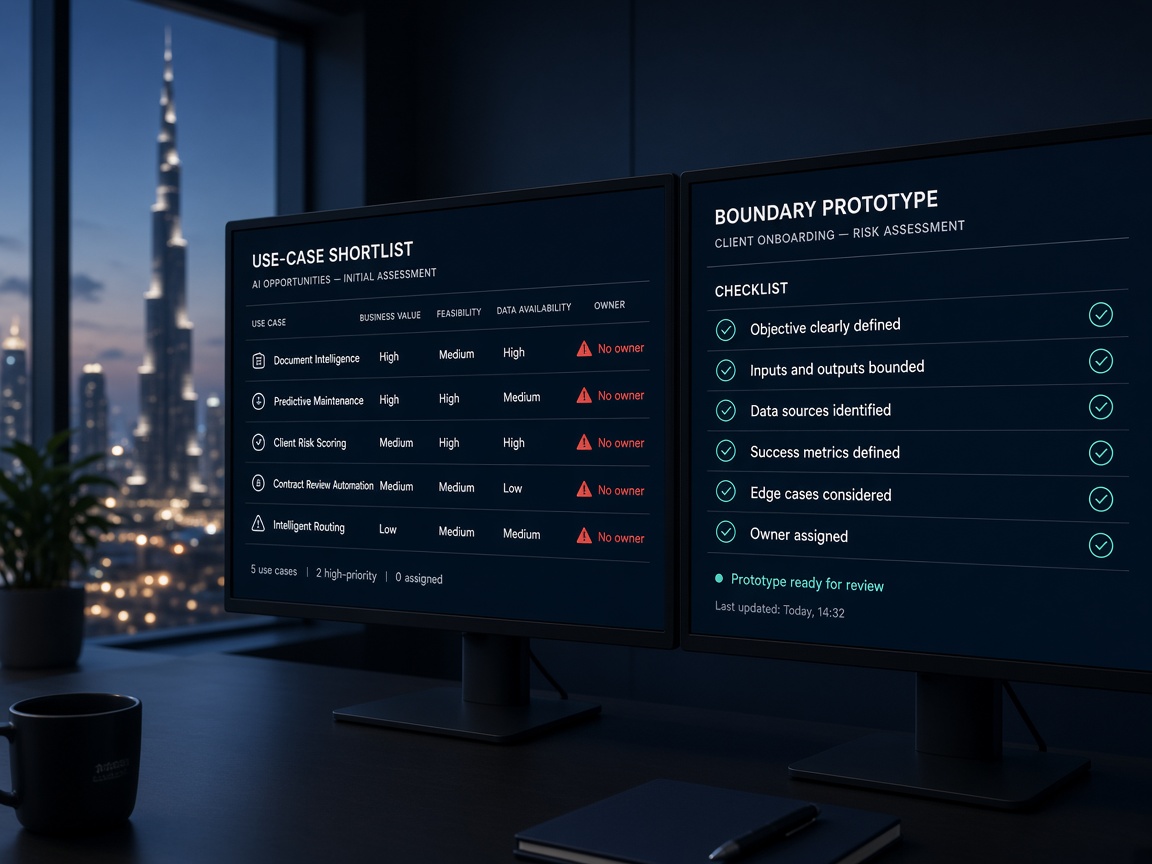
Prototype
A bounded build against one use case, tested against real operating conditions before anyone commits budget.
- 04
Deploy
Controls, evaluation, handover and adoption, so the tool is used after we leave.
What we build
- LLM-powered internal knowledge and search tools
- Focused AI assistants for defined business processes
- AI-enabled workflow automation across existing systems
- Document, contract and reporting processing tools
- AI models or engines for a specific use case
- Evaluation frameworks, testing and deployment controls
What clients get
- An AI opportunity and readiness assessment
- A prioritised use-case portfolio with a value and feasibility view
- An AI governance and internal policy framework
- A working prototype against an agreed use case
- A pilot roadmap, evaluation criteria and adoption plan
Not sure whether you need a roadmap or a build?
Most clients do not know at the start, and that is fine. A short conversation is usually enough to tell you whether the next step is research, a roadmap, a prototype or nothing yet.
- Roadmap or prototype clarity
- Use-case prioritisation
- No obligation to proceed
What we develop: AI-specific tools, models, LLM applications and workflow solutions. Outside licensed scope: generic software, websites, mobile apps, SaaS, cybersecurity and managed IT services.